Blog

What's New at DFW Sports Medicine

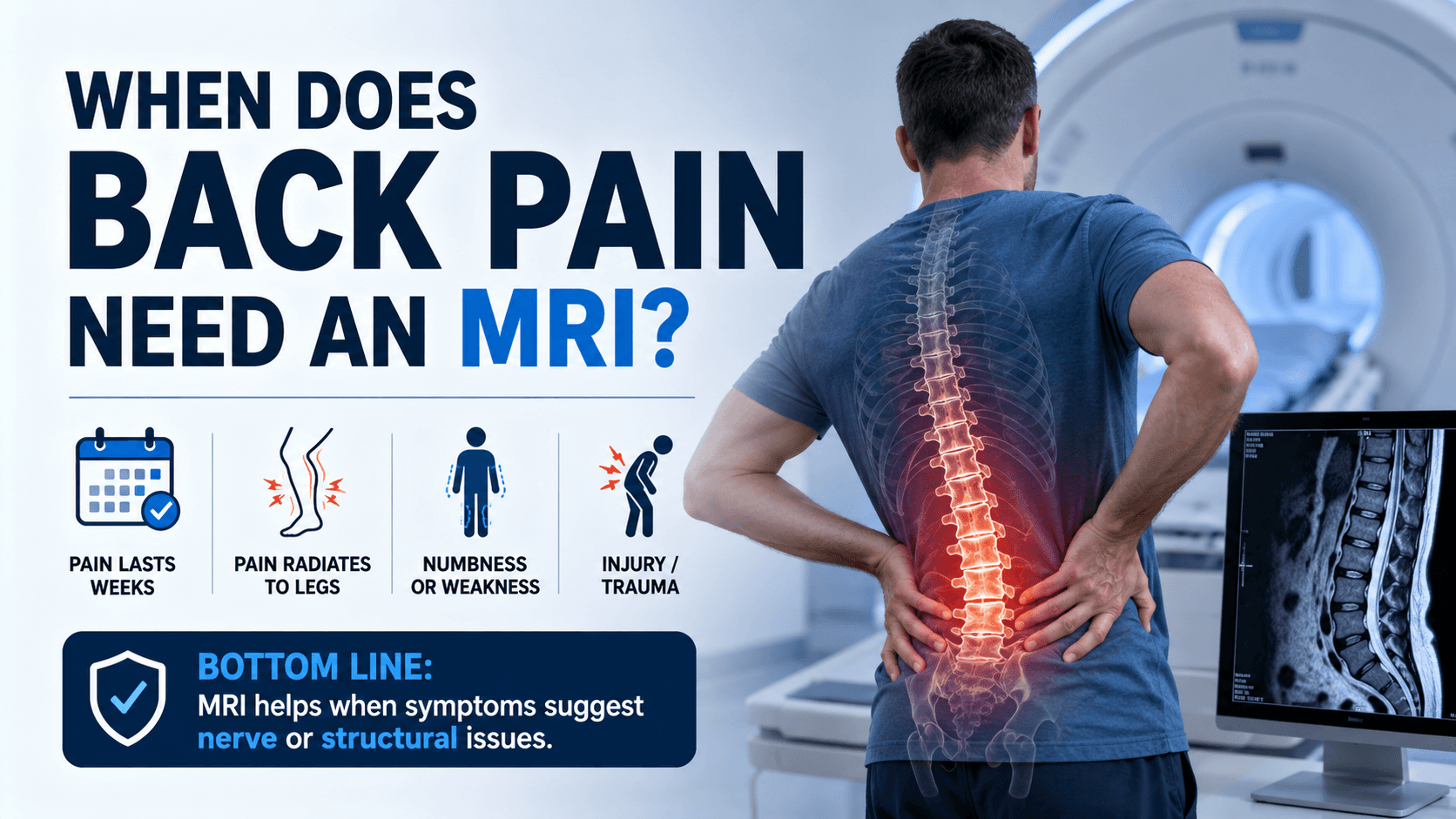
A man holds his lower back in pain while viewing an MRI scan on a screen. Text explains that an MRI is needed for back pain if it lasts, radiates to legs, causes numbness or weakness, or follows injury or trauma.

When Does Back Pain Need an MRI?

Back pain is one of the most common reasons people visit a doctor, but not every case requires advanced imaging. In fact, most episodes of back pain improve with time, activity modification, physical therapy, and conservative treatment. However, there are situations where an MRI becomes important to evaluate for nerve compression, disc injuries, or other

Diagram showing peripheral nerve stimulation for chronic pain, with an electrode lead and PNS stimulator on a person’s back. Lists treated conditions, benefits of PNS, and highlights minimally invasive pain relief.

Peripheral Nerve Stimulation for Chronic Pain: Minimally Invasive Relief Option

Chronic pain can interfere with every part of daily life — from work and exercise to sleep and overall well-being. For patients who have not found adequate relief with medications, injections, or physical therapy alone, Peripheral Nerve Stimulation (PNS) offers an innovative, minimally invasive treatment option designed to target pain at its source. What Is

Medical-themed graphic showing PRP injection for joint pain with an image of a syringe, highlighted knee joint, and icons for relieving pain, boosting recovery, healing injuries, and reducing inflammation. Text promotes natural healing.

PRP Injections for Joint Pain: Natural Healing and Lasting Relief

Joint pain can significantly impact your quality of life—whether it’s limiting your ability to exercise, work, or perform everyday activities. For patients looking for a minimally invasive, natural treatment option, Platelet-Rich Plasma (PRP) injections are gaining popularity as an effective solution. What Are PRP Injections? PRP (Platelet-Rich Plasma) therapy uses your body’s own healing components

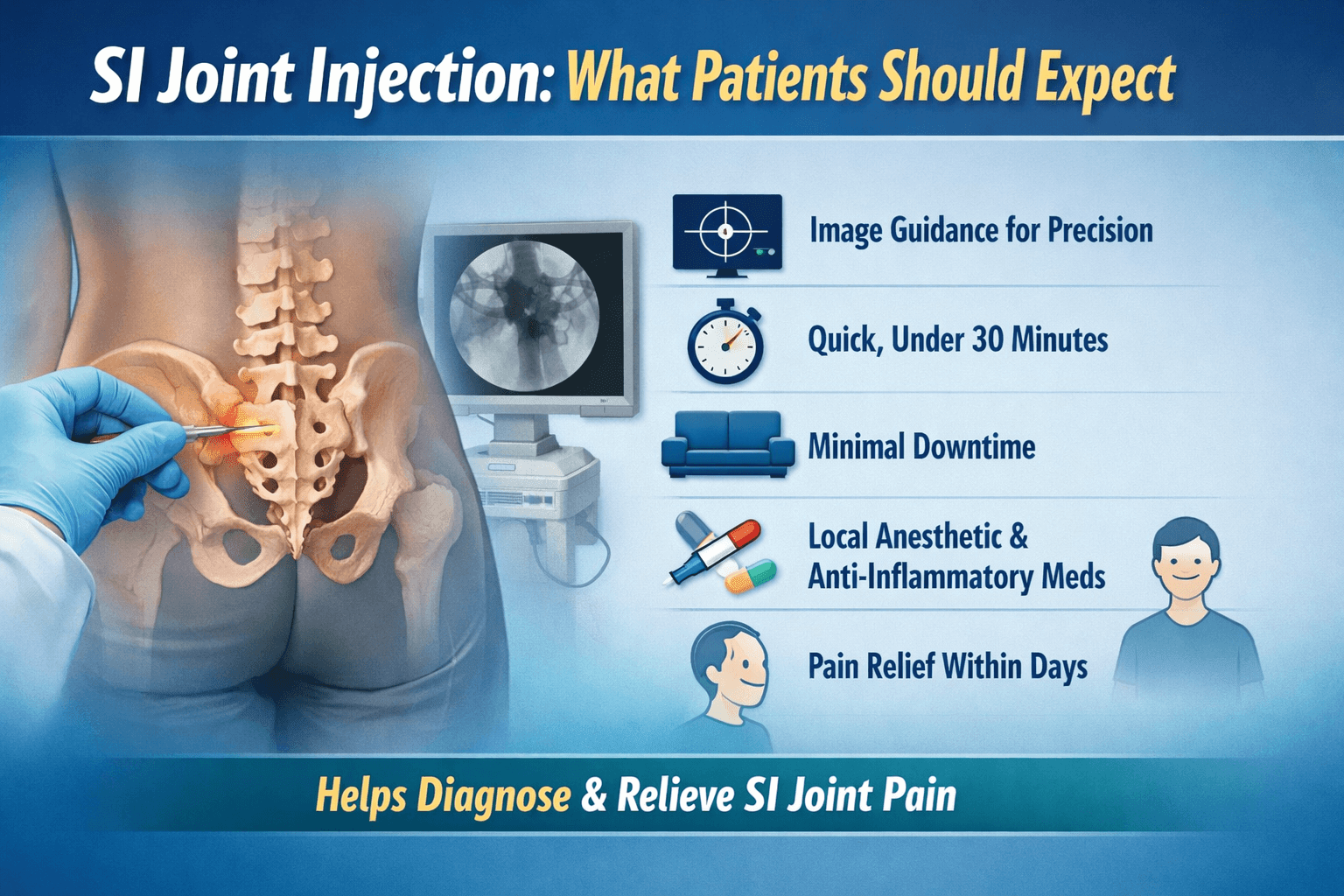
A doctor injects a needle near a patient’s lower back. Next to the image, text lists benefits of SI joint injection: precise image guidance, quick (under 30 minutes), minimal downtime, local anesthesia, and pain relief.

SI Joint Injection: What to Expect Before, During, and After the Procedure

Sacroiliac (SI) joint pain is a common cause of lower back, buttock, and hip discomfort. When inflammation or dysfunction develops in the SI joint, even simple daily activities like standing, walking, or climbing stairs can become painful. An SI joint injection is a minimally invasive procedure designed to both diagnose and treat pain originating from

A woman in athletic wear crouches on a path outdoors, holding her lower back in pain. Text reads: SI Joint Pain in Runners – Causes, Symptoms & Recovery Tips. Her lower back is highlighted with a red glow.

SI Joint Pain in Runners: Causes, Symptoms, Treatment, and Recovery Tips

What Is SI Joint Pain? The sacroiliac (SI) joint connects the spine to the pelvis and plays a critical role in absorbing impact while running. With every stride, this joint helps transfer force between the upper and lower body. When the SI joint becomes irritated or inflamed, it can lead to pain that affects both
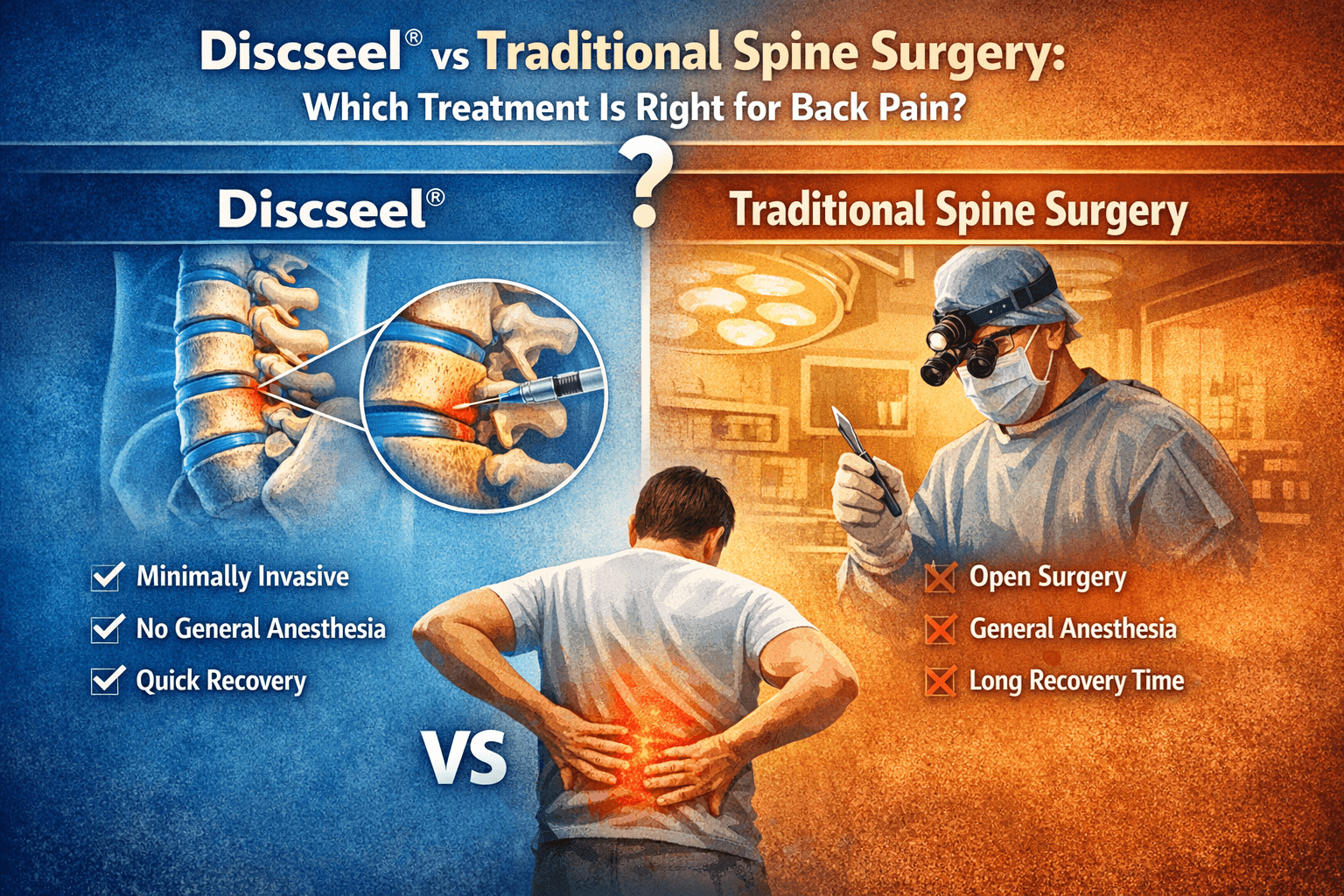
Split image compares Discseel vs. traditional spine surgery for back pain. Discseel shows minimally invasive, no general anesthesia, and quick recovery. Traditional surgery shows open surgery, general anesthesia, and long recovery time.

Discseel® vs Traditional Spine Surgery — what’s the difference?

Back pain is one of the most common reasons patients seek medical care, yet choosing the right treatment can feel overwhelming. Many patients are told surgery is their only option—but that isn’t always the case. For certain types of disc-related pain, Discseel® offers a minimally invasive alternative to traditional spine surgery. Understanding the differences between

A man holding his lower back in pain, with red highlighting the area. Text labels point to symptoms: stiffness when standing, muscle tightness, pain when bending or lifting, and radiating pain to hips and legs.

When Does Back Pain Need an MRI? Signs, Symptoms & When to Get Imaging

Back pain is one of the most common reasons people seek medical care, affecting millions each year. In most cases, lower back pain improves with time, activity modification, physical therapy, and other conservative treatments. Because of this, an MRI for back pain is not always needed right away. However, there are certain situations where advanced

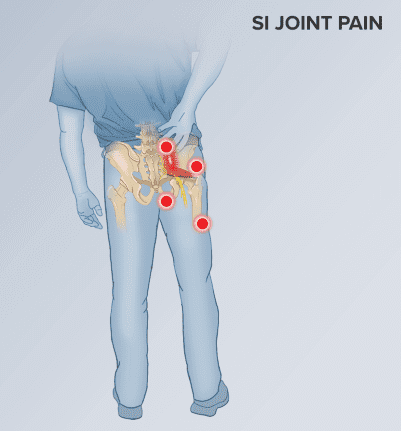
Illustration of a person from behind, touching their lower back and pelvis, with red circles highlighting areas of pain near the sacroiliac (SI) joint. Text reads SI JOINT PAIN.

SI Joint Pain: A Common Cause of One-Sided Lower Back Pain

What Is the SI Joint? The sacroiliac joints connect the base of your spine (the sacrum) to the pelvis (the iliac bones). There are two SI joints — one on each side of the lower spine. These joints play an important role in: Transferring weight between the upper body and legs Stabilizing the pelvis during