
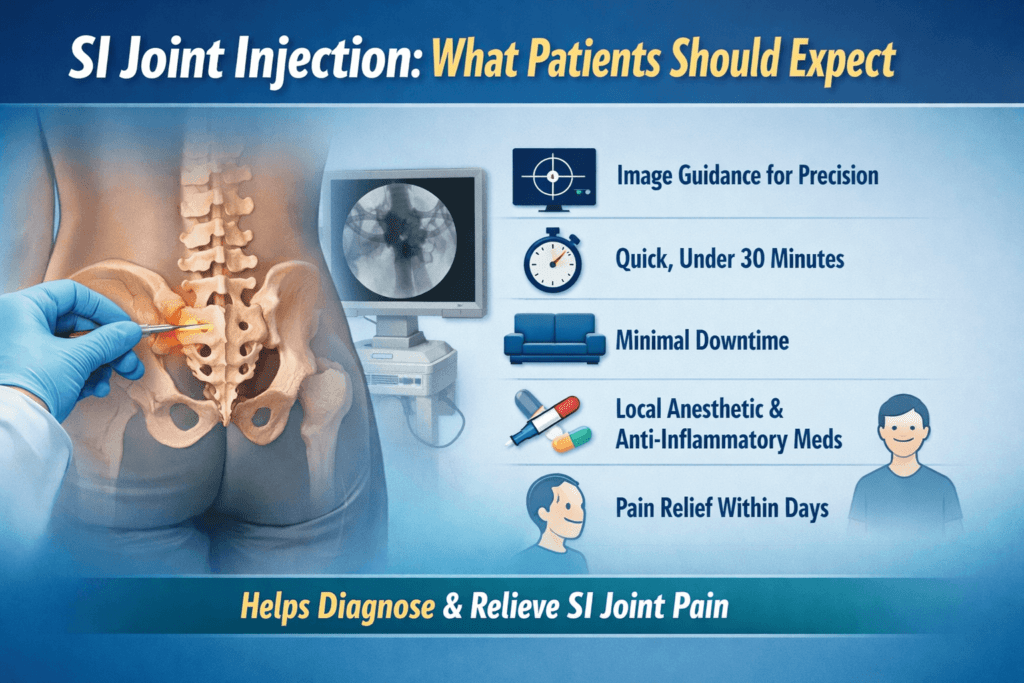
Sacroiliac (SI) joint pain is a common cause of lower back, buttock, and hip discomfort. When inflammation or dysfunction develops in the SI joint, even simple daily activities like standing, walking, or climbing stairs can become painful. An SI joint injection is a minimally invasive procedure designed to both diagnose and treat pain originating from this joint.
What Is an SI Joint Injection?
An SI joint injection involves delivering medication directly into the sacroiliac joint using imaging guidance, typically fluoroscopy (live X-ray) or ultrasound, to ensure precise placement. The injection usually contains:
A local anesthetic to temporarily numb pain
A corticosteroid to reduce inflammation
This procedure can help determine whether the SI joint is the true source of pain while also providing therapeutic relief.
What Happens During the Procedure?
Patients can generally expect the following:
1. Preparation
You will lie comfortably on a procedure table while the skin over the injection site is cleaned and sterilized.
2. Image-Guided Placement
Using fluoroscopy or ultrasound, the physician carefully guides the needle into the SI joint for accurate medication delivery.
3. Injection Delivery
Once proper placement is confirmed, the medication is injected into the joint space.
4. Short Procedure Time
Most SI joint injections take less than 30 minutes from start to finish.
Is the Procedure Painful?
Most patients tolerate SI joint injections very well. A local numbing agent minimizes discomfort, and while you may feel brief pressure during needle placement, the procedure is generally quick and manageable.
Recovery After an SI Joint Injection
Recovery is usually straightforward:
Minimal downtime is required
Most patients return home shortly after the procedure
Mild soreness at the injection site may occur temporarily
Pain relief may begin within hours to several days
Some patients experience immediate improvement from the anesthetic, while steroid-related relief often develops gradually over several days.
How Long Does Relief Last?
Pain relief duration varies depending on the underlying condition. Some patients experience weeks to months of improvement, while others may need repeat injections or additional treatments as part of a broader pain management plan.
When Should You Consider an SI Joint Injection?
You may be a candidate if you experience:
Lower back pain near the pelvis
Buttock pain on one or both sides
Pain worsened by standing, walking, or stairs
Discomfort when transitioning from sitting to standing
Final Thoughts
SI joint injections are a safe, effective option for diagnosing and treating sacroiliac joint pain. By reducing inflammation and confirming the pain source, they can help patients regain comfort, mobility, and function.
If persistent lower back or buttock pain is interfering with your daily life, discussing SI joint injections with a pain specialist may be the next step toward relief.