
Blog

What's New at DFW Sports Medicine

A person holds their painful right knee while descending stairs. Infographic text explains knee pain going down stairs, common causes, symptoms, reasons it hurts, and a labeled knee joint illustration.

Knee Pain Going Down Stairs

Pain when going down stairs is a common complaint and often points to increased stress on the patellofemoral joint (the kneecap and groove it slides in). While many people notice pain only on stairs, the underlying issue may involve cartilage irritation, muscle imbalance, or early joint degeneration. Common Causes of Stair-Related Knee Pain Several knee

A man holds his lower back in pain while viewing an MRI scan on a screen. Text explains that an MRI is needed for back pain if it lasts, radiates to legs, causes numbness or weakness, or follows injury or trauma.

When Does Back Pain Need an MRI?

Back pain is one of the most common reasons people visit a doctor, but not every case requires advanced imaging. In fact, most episodes of back pain improve with time, activity modification, physical therapy, and conservative treatment. However, there are situations where an MRI becomes important to evaluate for nerve compression, disc injuries, or other

A medical professional administers a cortisone injection into a persons shoulder, with anatomical graphics highlighting the joint. Text explains benefits: reduces inflammation, improves mobility, and supports recovery.

Cortisone Injection for Shoulder Pain

Shoulder pain can make simple activities like lifting your arm, reaching overhead, or sleeping comfortably difficult. One common cause is inflammation within the shoulder joint or surrounding tendons and bursae. When rest, medications, and physical therapy are not providing enough relief, a cortisone injection may help reduce pain and improve function. What Is a Cortisone

Infographic comparing meniscus tear and arthritis as causes of knee pain. Shows a person holding their knee in pain, labeled diagrams of knee injuries, and lists causes, symptoms, and treatments for each condition.

Meniscus Tear vs Arthritis: What’s Causing Your Knee Pain?

Knee pain can be frustrating—especially when you’re not sure what’s behind it. Two of the most common causes are meniscus tears and arthritis. While they can feel similar, they have different origins, symptoms, and treatment approaches. Meniscus Tear A meniscus tear involves damage to the cartilage that cushions your knee joint—often from a sudden movement.

A person holds their painful knee, which is highlighted in red. The text explains signs that knee pain may need surgery, including symptoms, conditions, and advice on diagnosis and treatment options.

When Knee Pain Needs Surgery

Knee pain is common, and in many cases, it improves with non-surgical treatments such as rest, physical therapy, medications, bracing, or injections. However, some knee conditions may require a surgical evaluation, especially when symptoms do not improve or begin affecting daily activity. You may need to see a specialist if you experience persistent knee pain

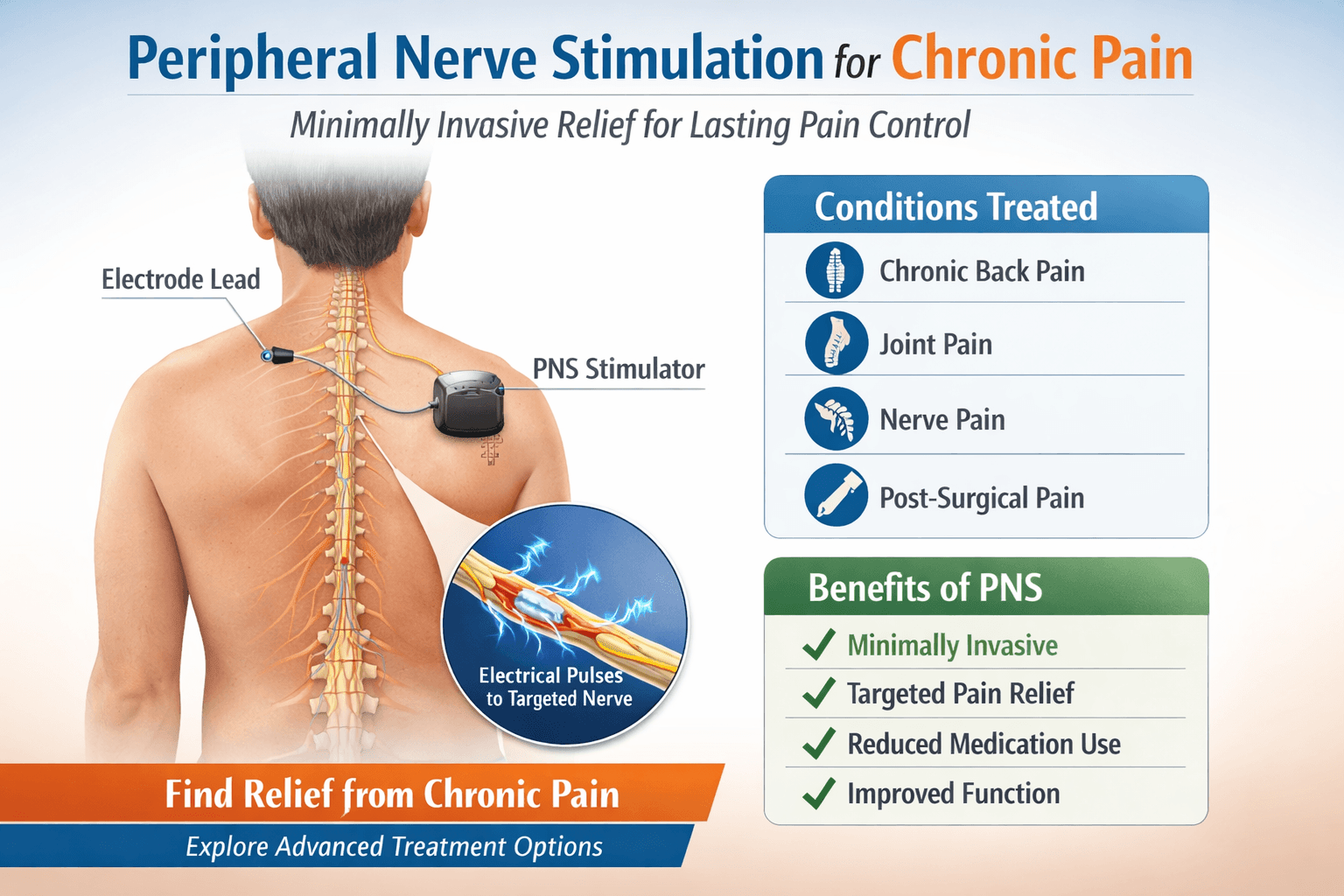
Diagram showing peripheral nerve stimulation for chronic pain, with an electrode lead and PNS stimulator on a person’s back. Lists treated conditions, benefits of PNS, and highlights minimally invasive pain relief.

Peripheral Nerve Stimulation for Chronic Pain: Minimally Invasive Relief Option

Chronic pain can interfere with every part of daily life — from work and exercise to sleep and overall well-being. For patients who have not found adequate relief with medications, injections, or physical therapy alone, Peripheral Nerve Stimulation (PNS) offers an innovative, minimally invasive treatment option designed to target pain at its source. What Is

A man holding his lower back in pain, with red highlighting the area. Text labels point to symptoms: stiffness when standing, muscle tightness, pain when bending or lifting, and radiating pain to hips and legs.

When Does Back Pain Need an MRI? Signs, Symptoms & When to Get Imaging

Back pain is one of the most common reasons people seek medical care, affecting millions each year. In most cases, lower back pain improves with time, activity modification, physical therapy, and other conservative treatments. Because of this, an MRI for back pain is not always needed right away. However, there are certain situations where advanced