
Blog

What's New at DFW Sports Medicine

A person holds their painful right knee while descending stairs. Infographic text explains knee pain going down stairs, common causes, symptoms, reasons it hurts, and a labeled knee joint illustration.

Knee Pain Going Down Stairs

Pain when going down stairs is a common complaint and often points to increased stress on the patellofemoral joint (the kneecap and groove it slides in). While many people notice pain only on stairs, the underlying issue may involve cartilage irritation, muscle imbalance, or early joint degeneration. Common Causes of Stair-Related Knee Pain Several knee

A person holds their painful knee, which is highlighted in red. The text explains signs that knee pain may need surgery, including symptoms, conditions, and advice on diagnosis and treatment options.

When Knee Pain Needs Surgery

Knee pain is common, and in many cases, it improves with non-surgical treatments such as rest, physical therapy, medications, bracing, or injections. However, some knee conditions may require a surgical evaluation, especially when symptoms do not improve or begin affecting daily activity. You may need to see a specialist if you experience persistent knee pain

Infographic comparing meniscus tear and arthritis as causes of knee pain. Shows a person holding their knee in pain, labeled diagrams of knee injuries, and lists causes, symptoms, and treatments for each condition.

Meniscus Tear vs Arthritis: What’s Causing Your Knee Pain?

Knee pain can be frustrating—especially when you’re not sure what’s behind it. Two of the most common causes are meniscus tears and arthritis. While they can feel similar, they have different origins, symptoms, and treatment approaches. Meniscus Tear A meniscus tear involves damage to the cartilage that cushions your knee joint—often from a sudden movement.

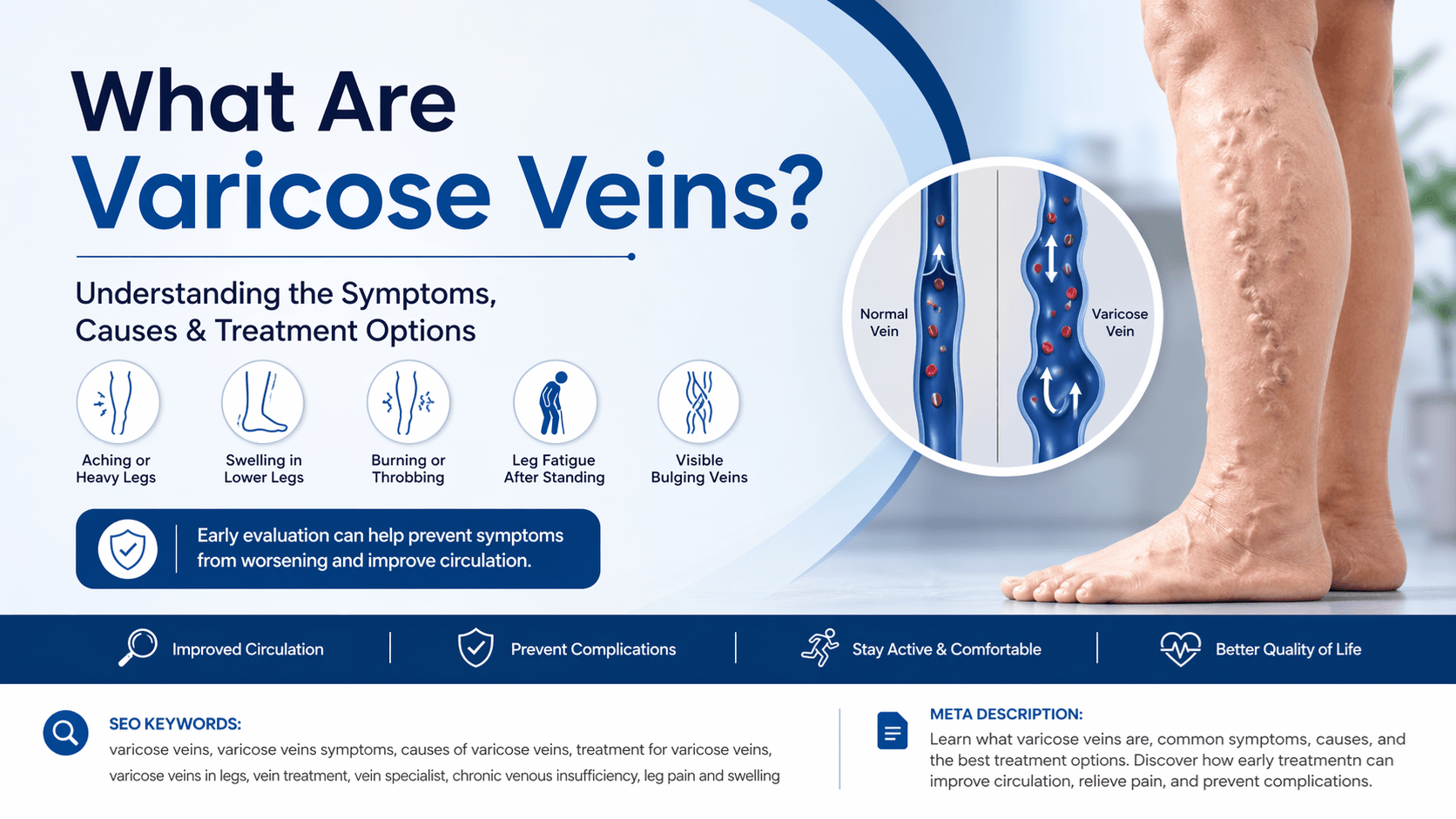
An infographic about varicose veins shows a leg with visible swollen veins, vein illustrations, symptoms icons, and treatment benefits like improved circulation and better quality of life. Text explains symptoms, causes, and treatment options.

What Are Varicose Veins?

Noticing bulging or twisted veins in your legs? You may be dealing with varicose veins — a common condition caused by weakened or damaged vein valves, leading to poor blood flow and pooling of blood in the veins. Common Symptoms Varicose veins can present with a range of symptoms, including: • Aching or heavy legs
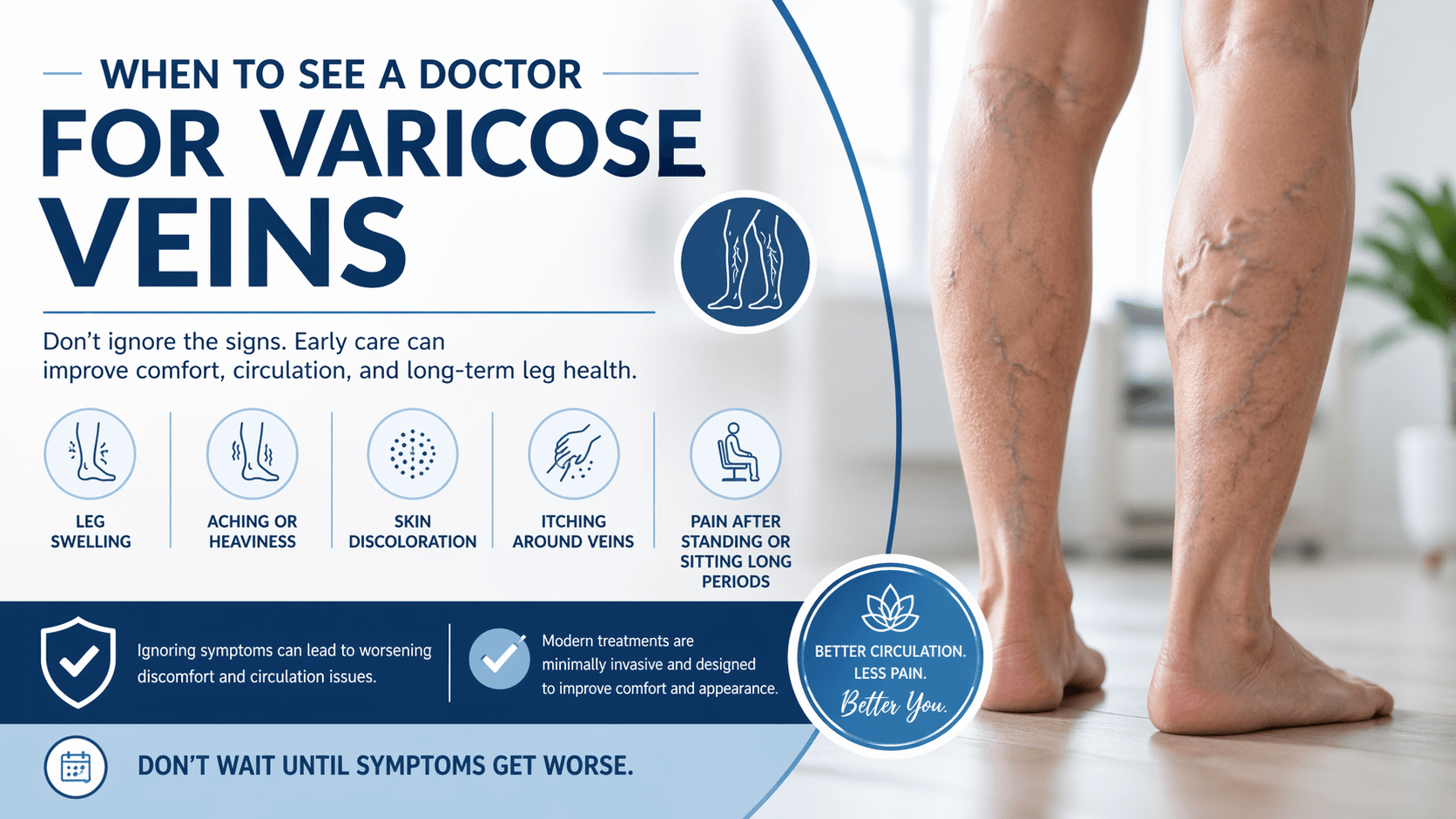
A person’s lower legs with visible varicose veins. An infographic explains when to see a doctor for varicose veins, showing icons and symptoms like swelling, aching, discoloration, itching, and pain after standing or sitting long.

When to See a Doctor for Varicose Veins: Signs You Shouldn’t Ignore

Varicose veins are more than a cosmetic concern — they can signal underlying circulation issues that may worsen over time if left untreated. You should consider evaluation if you experience: • Leg swelling • Aching or heaviness • Skin discoloration • Itching around veins • Pain after standing or sitting for long periods These symptoms