
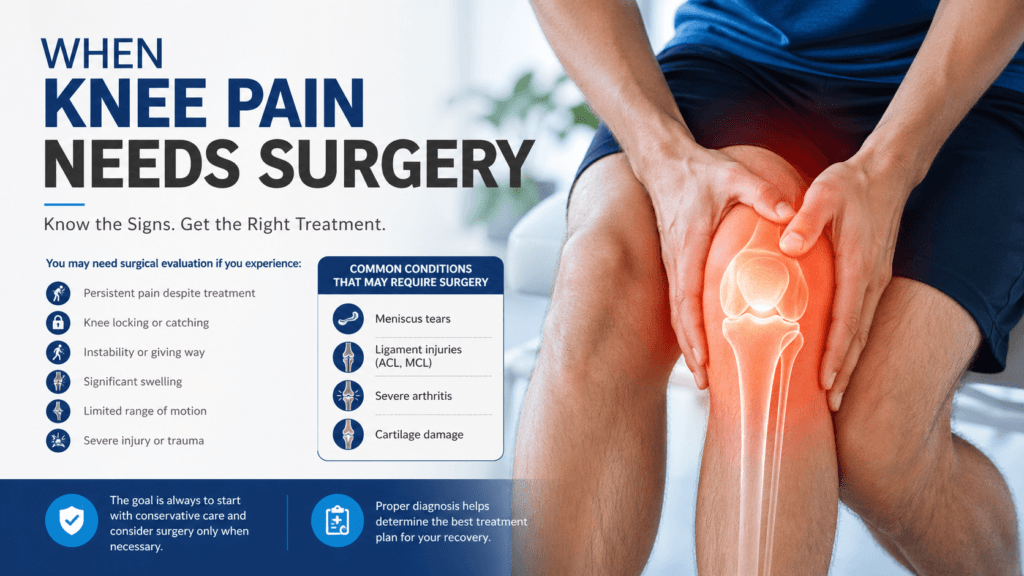
Knee pain is common, and in many cases, it improves with non-surgical treatments such as rest, physical therapy, medications, bracing, or injections. However, some knee conditions may require a surgical evaluation, especially when symptoms do not improve or begin affecting daily activity.
You may need to see a specialist if you experience persistent knee pain despite treatment, locking or catching, instability, giving way, significant swelling, limited range of motion, or pain after a severe injury or trauma.
Common knee conditions that may sometimes require surgery include meniscus tears, ligament injuries such as ACL or MCL tears, severe arthritis, and cartilage damage.
The goal is always to begin with conservative care whenever appropriate and consider surgery only when necessary. A proper diagnosis can help determine whether your knee pain can be treated non-surgically or if surgical evaluation is the best next step for recovery.