
What Is the SI Joint?
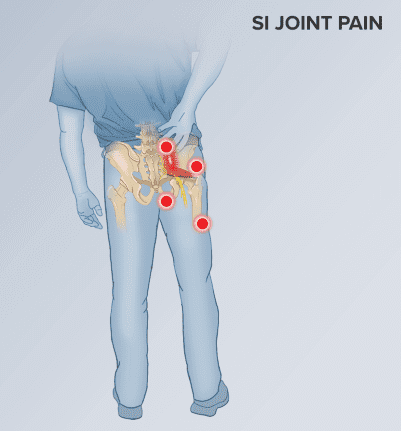
The sacroiliac joints connect the base of your spine (the sacrum) to the pelvis (the iliac bones). There are two SI joints — one on each side of the lower spine.
These joints play an important role in:
Transferring weight between the upper body and legs
Stabilizing the pelvis during walking and standing
Absorbing shock during movement
When the joint becomes inflamed, irritated, or unstable, it can lead to SI joint dysfunction.
Symptoms of SI Joint Dysfunction
SI joint pain often appears on one side of the lower back and can mimic other spine conditions.
Common symptoms include:
Pain on one side of the lower back
Buttock pain
Pain that may radiate into the hip or leg
Discomfort when standing up from a seated position
Pain with prolonged standing or walking
Tenderness over the back of the pelvis
Because these symptoms can resemble sciatica or lumbar spine problems, SI joint pain is frequently misdiagnosed.
Accurate diagnosis is key to choosing the right treatment.
Causes of SI Joint Pain
Several factors can contribute to SI joint dysfunction, including:
Trauma or falls
Pregnancy and hormonal changes
Degenerative arthritis
Prior spine surgery
Repetitive stress from sports or physical activity
Differences in leg length or abnormal gait mechanics
Even prolonged sitting or improper lifting mechanics can aggravate the SI joint.
How SI Joint Dysfunction Is Diagnosed
Diagnosing SI joint pain requires a combination of:
1. Physical Examination
Specific clinical tests help identify whether the SI joint is the source of pain.
2. Imaging Studies
X-rays, CT scans, or MRI may be used to rule out other causes of pain.
3. Diagnostic Injections
A fluoroscopy-guided SI joint injection can confirm the diagnosis by temporarily relieving the pain if the SI joint is the true source.
This step is often the most reliable way to identify SI joint pain.
Treatment Options for SI Joint Pain
Most patients improve with conservative treatments, including:
Physical Therapy
Focused therapy can strengthen the muscles that support the pelvis and improve joint stability.
Activity Modification
Avoiding movements that aggravate the joint while gradually restoring normal function.
SI Joint Injections
Image-guided injections can reduce inflammation and provide significant pain relief.
Advanced Interventions
When conservative treatments fail, additional options may be considered.
Minimally Invasive SI Joint Fusion
For patients with chronic SI joint pain that does not respond to therapy or injections, minimally invasive SI joint fusion may be an option.
This procedure stabilizes the joint and can significantly reduce pain.
Potential benefits include:
Small incisions
Minimal muscle disruption
Shorter recovery time
Improved joint stability
Long-term pain relief for appropriately selected patients
The goal is simple: reduce pain and restore normal movement so patients can return to their daily activities safely.
When to See a Specialist
If you are experiencing persistent one-sided lower back pain or buttock pain that has not improved with rest or therapy, it may be time for a specialist evaluation.
Early diagnosis can help prevent long-term pain and guide the most effective treatment.
SI Joint Pain Treatment in Dallas
At DFW Sports Medicine, we specialize in diagnosing and treating spine and joint conditions, including SI joint dysfunction.
Our approach focuses on:
Accurate diagnosis
Non-surgical treatment whenever possible
Advanced minimally invasive procedures when needed
If lower back pain is affecting your quality of life, a comprehensive evaluation can help determine the source and the most appropriate treatment.
Schedule an evaluation today to take the first step toward lasting relief.