
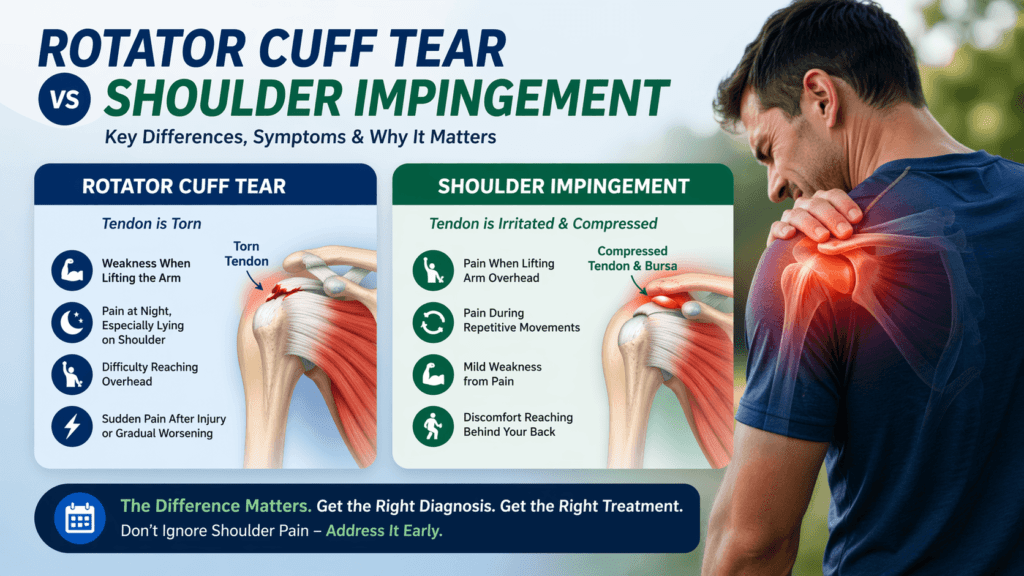
Shoulder pain can interfere with simple daily activities like reaching overhead, getting dressed, or even sleeping comfortably. Two of the most common causes are rotator cuff tears and shoulder impingement. While these conditions share similar symptoms, understanding the difference is essential for proper treatment.
Rotator Cuff Tear
A rotator cuff tear occurs when one or more of the tendons that stabilize the shoulder become partially or completely torn.
Common symptoms include:
Weakness when lifting the arm
Pain at night, especially when lying on the affected shoulder
Difficulty reaching overhead
Sudden pain after injury or gradual worsening over time
Rotator cuff tears may develop from acute injury or chronic wear and tear, especially in active individuals or with aging.
Shoulder Impingement
Shoulder impingement occurs when the rotator cuff tendons or bursa become irritated and compressed during arm movement.
Common symptoms include:
Pain when lifting the arm overhead
Pain with repetitive movements
Mild weakness due to pain
Discomfort when reaching behind the back
This condition is often related to overuse, poor biomechanics, or inflammation.
Why the Difference Matters
Although these conditions can feel similar, the underlying cause is different — and so is the treatment approach.
Rotator cuff tears may require imaging (MRI or ultrasound) and, in some cases, surgical repair
Shoulder impingement is often treated with physical therapy, activity modification, and anti-inflammatory treatments
An accurate diagnosis ensures you receive the most effective treatment and avoid worsening the condition.
When to Seek Evaluation
If shoulder pain persists, worsens, or limits your daily activities, early evaluation is important. Prompt diagnosis can help reduce pain, restore mobility, and prevent further injury.
Don’t ignore shoulder pain — addressing it early leads to better outcomes and faster recovery.