
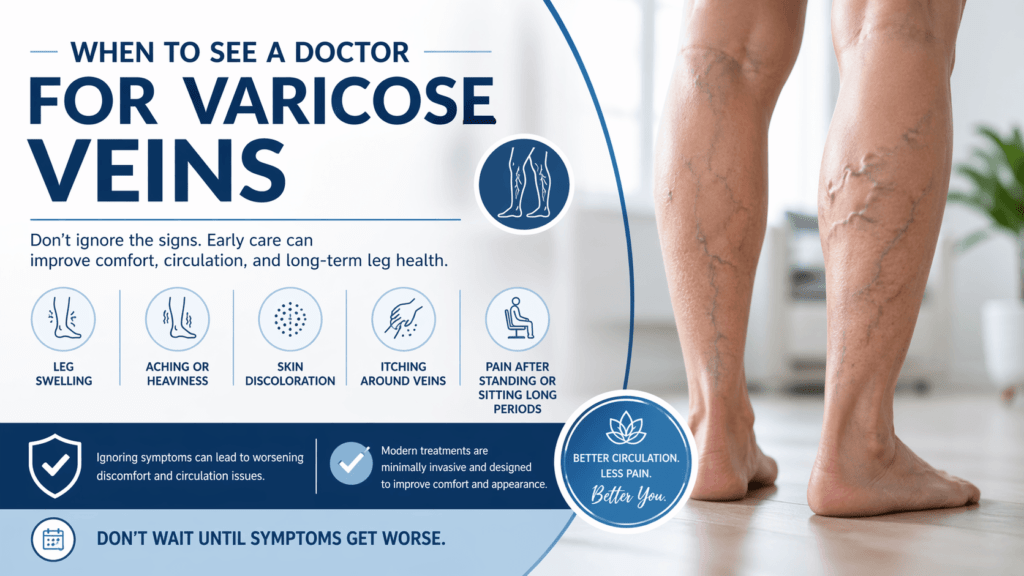
Varicose veins are more than a cosmetic concern — they can signal underlying circulation issues that may worsen over time if left untreated.
You should consider evaluation if you experience:
• Leg swelling
• Aching or heaviness
• Skin discoloration
• Itching around veins
• Pain after standing or sitting for long periods
These symptoms often indicate increased pressure in the veins and reduced blood flow efficiency.
Why early evaluation matters
Ignoring these signs can lead to progressive discomfort, worsening vein appearance, and potential complications such as skin changes or inflammation. Early diagnosis allows for more effective, less invasive treatment options.
Modern treatment options
Today’s treatments are minimally invasive, quick, and require little to no downtime. Options may include:
• Ultrasound-guided procedures
• Thermal ablation (laser or radiofrequency)
• Sclerotherapy
These approaches are designed to relieve symptoms, improve circulation, and enhance overall leg appearance.
Don’t wait
If you’re noticing symptoms, early evaluation can help prevent progression and improve your quality of life.