
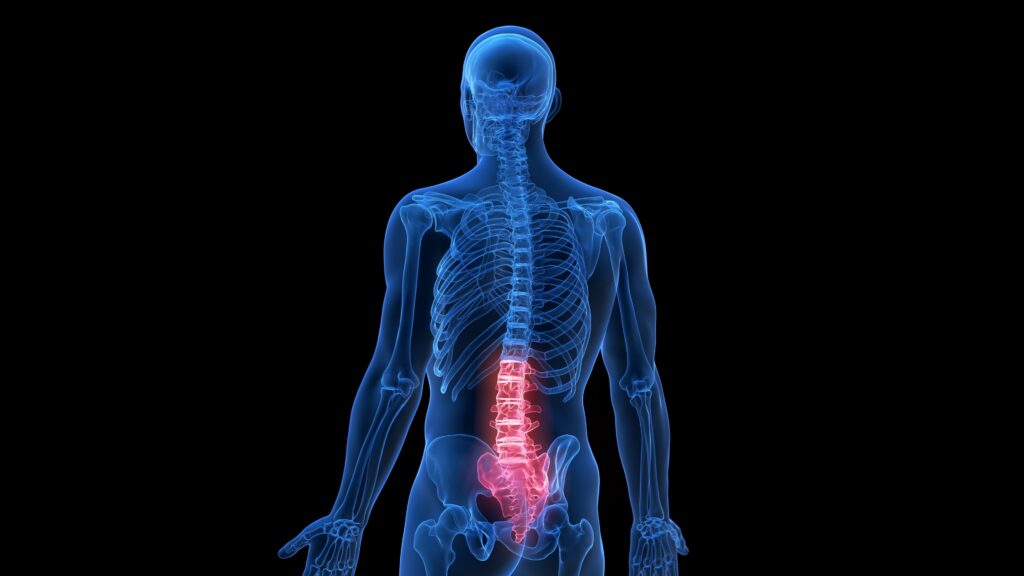
Lumbar spinal stenosis can cause lower back pain, leg pain, numbness, tingling, or weakness. For some people, symptoms become worse when standing or walking and improve when sitting or leaning forward. This pattern, known as neurogenic claudication, can occur when narrowing in the lower spine reduces the space available for the nerves.
Depending on the cause and severity of the spinal narrowing, treatment may include physical therapy, medications, injections, or minimally invasive procedures. Two options that may be discussed for selected patients are the MILD® Procedure and an epidural steroid injection (ESI).
Although both may be used as part of the treatment of lumbar spinal stenosis, they address different aspects of the condition. An epidural steroid injection is intended to reduce inflammation and irritation around the spinal nerves, while the MILD Procedure is designed to address a specific structural contributor to spinal canal narrowing in appropriately selected patients.
The right treatment depends on the anatomy causing the symptoms, medical history, physical examination, imaging findings, and response to previous treatment.
At DFW Sports Medicine, patients in McKinney and Frisco, Texas, can receive an evaluation to determine what may be contributing to their symptoms and discuss appropriate treatment options.
What Is the MILD Procedure?
The MILD Procedure, or minimally invasive lumbar decompression, is a minimally invasive procedure designed for appropriately selected patients with lumbar spinal stenosis.
One potential contributor to lumbar spinal stenosis is hypertrophy, or thickening, of the ligamentum flavum. The ligamentum flavum is a ligament located along the back portion of the spinal canal. When it becomes thickened, it can reduce the amount of available space within the spinal canal and contribute to compression of the nerves.
During the MILD Procedure, specialized instruments are introduced through a small incision using imaging guidance. Small portions of hypertrophied ligamentum flavum and other tissue necessary for the decompression are removed to increase the available space within the spinal canal.
The goal is to reduce a structural contributor to spinal canal narrowing without performing traditional open spinal surgery.
MILD may be considered for appropriately selected patients with lumbar spinal stenosis and neurogenic claudication when thickened ligamentum flavum contributes to the narrowing.
You can learn more about the MILD® Procedure on our MILD Procedure service page.
What Is an Epidural Steroid Injection?
An epidural steroid injection delivers medication into the epidural space around the spinal nerves.
The injection typically contains a corticosteroid, sometimes combined with a local anesthetic. The medication is intended to reduce inflammation around irritated spinal nerves and may help relieve pain.
Depending on the anatomy and symptoms, an epidural injection may be delivered through different approaches.
Unlike MILD, an epidural steroid injection does not remove ligament, bone, or other tissue that is physically contributing to spinal canal narrowing. Instead, it is intended to address inflammation and pain associated with irritated nerves.
MILD Procedure vs. Epidural Steroid Injection: Key Differences
The main difference is what each treatment is designed to address.
| MILD Procedure | Epidural Steroid Injection | |
|---|---|---|
| Primary approach | Minimally invasive decompression of appropriate structural narrowing | Delivers medication around spinal nerves |
| Type of treatment | Minimally invasive decompression procedure | Injection-based treatment |
| Main target | Selected lumbar spinal stenosis involving hypertrophied ligamentum flavum | Inflammation and irritation around spinal nerves |
| Uses imaging guidance | Yes | Yes |
| Removes tissue | Yes, in a limited and targeted manner | No |
| Steroid medication | No | Typically yes |
| Suitability | Depends on symptoms, imaging, and anatomy | Depends on diagnosis and symptoms |
These differences are important because lumbar spinal stenosis can have more than one contributing cause. An injection and a decompression procedure are not interchangeable treatments, and the most appropriate option depends on what is contributing to an individual patient’s symptoms.
When Might an Epidural Steroid Injection Be Considered?
An epidural steroid injection may be considered when inflammation or irritation around a spinal nerve is contributing to symptoms.
For example, a physician may discuss an ESI when lumbar spinal stenosis is associated with leg pain or other symptoms that appear related to nerve irritation.
An injection may also be used as part of a broader nonsurgical treatment plan.
The effects of an epidural steroid injection vary. Some patients experience temporary relief, while others may have a different response. Because an injection does not remove the tissue responsible for structural spinal canal narrowing, it does not physically decompress the spinal canal.
When Might the MILD Procedure Be Considered?
The MILD Procedure may be considered when symptoms, examination findings, and imaging are consistent with lumbar spinal stenosis and the patient has anatomy appropriate for the procedure.
One important consideration is hypertrophic or thickened ligamentum flavum contributing to spinal canal narrowing. MILD is designed to remove a small amount of this tissue to increase available space within the spinal canal.
A physician may also consider:
The location and severity of the spinal narrowing
Symptoms consistent with neurogenic claudication
How long symptoms have been present
Previous nonsurgical treatments
MRI or other imaging findings
Overall health and medical history
Whether the patient’s anatomy is appropriate for the procedure
Not everyone with lumbar spinal stenosis is a candidate for MILD.
Can an Epidural Injection and MILD Be Used Together?
In some treatment plans, different treatments may be used at different stages.
For example, a physician may recommend an epidural steroid injection as part of nonsurgical treatment. If symptoms persist and imaging demonstrates an appropriate structural cause of lumbar spinal stenosis, other treatment options, including MILD, may later be discussed.
There is no single treatment sequence that applies to everyone with lumbar spinal stenosis. The choice depends on the cause of the symptoms, the patient’s anatomy, and how the patient responds to treatment.
Which Treatment Is Right for Lumbar Spinal Stenosis?
There is no single option that is appropriate for every patient.
An epidural steroid injection may be more relevant when inflammation or irritation around a spinal nerve is an important contributor to symptoms. The MILD Procedure may be considered when lumbar spinal stenosis with neurogenic claudication is associated with appropriate structural narrowing, particularly when hypertrophied ligamentum flavum contributes to the stenosis.
A physician may recommend one treatment, both at different stages of care, or a different approach altogether.
A thorough evaluation can also help distinguish lumbar spinal stenosis from other potential causes of back and leg symptoms, including herniated discs, facet joint problems, sacroiliac joint problems, peripheral nerve conditions, and other conditions.
How Is the Right Treatment Determined?
The process usually begins with a medical history and physical examination.
Your physician may ask about:
Where your pain or other symptoms occur
Whether symptoms affect one or both legs
How long you can stand or walk
Whether sitting or leaning forward provides relief
Whether you have numbness, tingling, or weakness
Previous treatments and how you responded to them
Other medical conditions and medications
Imaging, particularly an MRI, may also be reviewed to identify the location and potential causes of spinal narrowing.
An important point is that an MRI finding alone does not automatically determine treatment. Imaging findings should be considered together with the patient’s symptoms, physical examination, medical history, and response to previous treatments.
What About Recovery?
Recovery depends on the treatment and the individual patient.
An epidural steroid injection is generally performed as an outpatient procedure, and many patients can return home the same day. Your physician will provide instructions regarding activity after the injection.
The MILD Procedure is also minimally invasive and is generally performed as an outpatient procedure. Temporary soreness or discomfort can occur, and activity recommendations vary depending on the individual situation.
Your physician should explain what to expect before and after either treatment, including potential risks, benefits, alternatives, and follow-up.
Neither treatment guarantees that symptoms will improve, and individual results vary.
Frequently Asked Questions
Is MILD the same as an epidural steroid injection?
No. MILD is a minimally invasive lumbar decompression procedure intended to address certain structural causes of lumbar spinal canal narrowing, particularly hypertrophied ligamentum flavum in appropriately selected patients. An epidural steroid injection delivers medication around spinal nerves and is intended to reduce inflammation and irritation.
Does an epidural steroid injection fix spinal stenosis?
An epidural steroid injection does not remove the structural tissue causing spinal canal narrowing. Instead, it is intended to reduce inflammation and irritation around affected nerves and may provide symptom relief for some patients.
Does MILD involve removing bone?
The primary target of the MILD Procedure is hypertrophied ligamentum flavum contributing to lumbar spinal canal narrowing. The procedure removes small amounts of ligamentous tissue, and limited bony work may be performed when necessary as part of the minimally invasive decompression. It does not involve the extensive bone removal associated with traditional open lumbar decompression surgery.
The exact anatomy treated depends on the individual patient’s condition and imaging findings.
Can MILD help with leg pain from spinal stenosis?
MILD may be considered for appropriately selected patients with neurogenic claudication or leg symptoms associated with lumbar spinal stenosis when hypertrophied ligamentum flavum or other appropriate anatomy contributes to the narrowing. An evaluation is necessary to determine whether the procedure is appropriate.
How do I know whether I need an epidural injection or MILD?
The decision depends on your symptoms, physical examination, imaging, medical history, previous treatments, and the specific cause of the spinal narrowing.
An epidural steroid injection and MILD address different aspects of lumbar spinal stenosis. A physician can review these factors and discuss which treatment options may be appropriate for your individual condition.
MILD and epidural steroid injections are different treatments that may have a role in managing symptoms associated with lumbar spinal stenosis.
An epidural steroid injection is designed to deliver medication around irritated spinal nerves to reduce inflammation. MILD is a minimally invasive lumbar decompression procedure designed to address certain forms of structural spinal canal narrowing, particularly when hypertrophied ligamentum flavum contributes to the stenosis.
Understanding the source of your symptoms is an important first step. At DFW Sports Medicine, patients in McKinney, Frisco, and surrounding North Texas communities can receive an evaluation and discuss treatment options based on their individual condition.
Schedule an appointment at DFW Sports Medicine.
This article is for educational purposes only and is not a substitute for medical advice, diagnosis, or treatment. Treatment recommendations depend on each patient’s examination, diagnosis, medical history, imaging findings, and other individual factors. Individual results vary. All treatment options have potential risks and benefits that should be discussed with a qualified medical professional.